Thursday, 17 October 2013

'The Face' - Media Reviews

DigitalSpy:

Naomi Campbell on Sky Living's 'The Face'Naomi Campbell is the latest big name from the modelling world to try her hand at reality TV, launching Sky Living's latest attempt at a 'Supermodel X Factor'.

Model reality shows in the UK have a patchy record and that's probably putting it politely. They can never truly compete with their US counterparts when it comes to hideously mean judges, catty contestants and ludicrous melodrama over having to get your hair cut a couple of inches shorter.

Sky Living's signing of Campbell, modelling's most notorious and intriguing character, is probably the last roll of the dice for the format. If Campbell can't make a show about models interesting then I seriously doubt anybody can.

There are some promising early signs that The Face can be more than Next Top Model-lite.

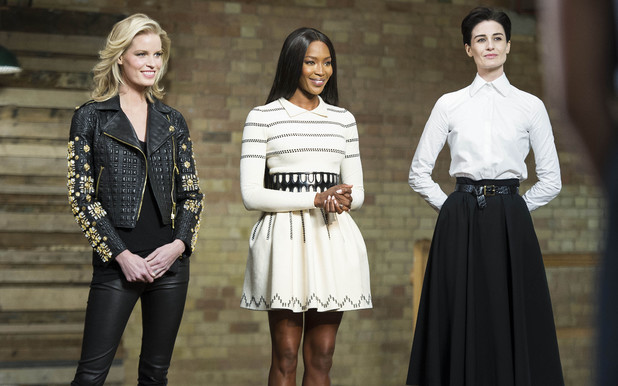
Firstly, its format takes on the classic Voice twist and encourages the judges - Campbell, Erin O'Connor and Caroline Winberg - to fight it out for the girls they want on their team. This spices up the usual judges' chit chat about the girls' looks, which is frankly a bit tedious, and turns the show into a much more entertaining bragging competition between the three super-cocky mentors.

Secondly, it's quickly realised that having beautiful girls taking part is only half the deal with a TV show. They've also included some hideous individuals (think Katie Waissel to the power of Jedward and you'll have the irritation levels of one of the aspiring models) who will make hate-watching every week incredibly easy.


The biggest stumbling block for any TV show about modelling is the puzzle of taking the job - standing, walking, pouting - and making it something that viewers will give a flying one about.

Watching a gaggle of wannabe models bitch and moan for 10 weeks provides a relative amount of amusement, but The Face will need to find a way to spruce up the stereotypical model show challenges.

Take your make-up off and have a photo. Take your clothes off and pose. Have a picture with an animal. And repeat.

If The Face can't figure out a way of dealing with that problem then it will require more than a bit of 'mad Naomi' to save it from the telly trash can.


Naomi Campbell, Erin O’Connor and Caroline Winberg form an elegant triumvirate of judges-come-mentors in ‘The Face’, Sky Living’s new modelling reality series. This opening episode pitches us straight into the eliminations. There are no car-crash TV auditions to sit through in this new breed of streamlined reality – we don’t have time to get to know these contestants!

Twenty-four gazelle-like girls are picked in advance of the programme, reduced to 12 by the end of the show. Similar to BBC1’s ‘The Voice’, in that Campbell, O’Connor and Winberg may choose the girl they want for their team, but the final decision is taken by the contestants themselves: the faux fur will surely fly at some point.

This is clearly Naomi Campbell’s showcase but, refreshingly, she seems to have no desire to turn into the sanguine Tyra Banks of ‘America’s Next Top Model’. Her catwalk demonstration is the highlight of the show and proves why, at 43, she still doesn’t need to get out of bed for just anything.


Monday, 14 October 2013

Realism & Lacan Theory

Realism: The techniques by which a media text represents ideas and images that are held to have a true relationship with the actual world around us. Realism means different things in different texts - realism in animation (eg the movement of single hairs in computer animation) means something entirely different to realism in soap opera (eg the depiction of people eating breakfast and talking with their mouths full). it is important to assess how much a text strives for realism, how much audiences are expected to think it is realistic.
(http://www.mediaknowall.com/gcse/keyconceptsgcse/keycon.php?pageID=keyterms)

By definition, reality TV is essentially unscripted programming that doesn't employ actors and focuses on footage of real events or situations. Reality shows also often use a host to run the show or a narrator to tell the story or set the stage of events that are about to unfold. The Face use the 3 Top Model Judges as their hosts, as they explain to the girls what they will be doing next, the audience find out at the same time. Unlike scripted shows like sitcoms, dramas and newscasts, reality TV does not rely on writers and actors, and much of the show is run by producers and a team of editors. Because of this, it can be a very affordable programming option from a production standpoint. However you could argue that The Face does have scripting through picking specific points to show the audience of what the judges are telling them, especially when it comes to the challenges as it is almost certain this has been pre-written before being voiced to the girls. 
The defining aspect of reality TV is  the manner in which it is shot. Whether the show takes place in a real setting with real people (much like a documentary), shoots in front of a live studio audience that participates in the program, or uses hidden surveillance, reality TV relies on the camera capturing everything as it happens. The Face uses mainly the former as they are real girls in actual situations but they are not 'everyday' places in most occasions with photo-shoots and fashion agencies playing a main role. Also there is an element of hidden surveillance when they live in a house together as a lot of this is recorded for the audience's entertainment to get a feel for the friendship and leadership dynamic among the girls, this is similar to programmes such as "I'm a Celebrity, Get Me Out of Here" and "Big Brother".
The Face has been created with certain concepts in mind and the girls auditioned and put through into the competition are there for a reason, while the footage may be real, it is usually extremely edited to fit the brief, genre or audience they are aiming for. It is filmed over 8/9 weeks with 8 episodes being shown, and each episode is 45 minutes therefore the amount of time spent filming the girls is no-where near what we're actually being shown. It becomes edited so that we only see the "best bits" for example certain clips of girls saying things will be put in places to add dramatic effect and set it up to be an interesting challenge as they might say they have a certain fear of something or never experienced it. This is called 'frankenbiting' where they edit together conversations extracts or sound bites to create a whole new dialogue or conversation, thus essentially creating alliances, fights and relationships among the judges or girls.  Often the girls actions will be taken out of context and send a misleading message to the audience. 
Reality shows typically don't have scripts, but there is often a shooting script or an outline that details aspects of an episode or part of the show. For example, in The Face there might be directions for certain challenges, tasks and camera angles and information the Judges must give to the camera to inform the audience. Reality producers and editors have a lot of control over what happens on the show, just by the fact that they've put people together in certain situations, and they're controlling what footage gets aired and what doesn't. 
Also another thing that separates reality TV from scripted programmes is the use of actors or not, reality TV is supposedly real people however after the shows have finished and background research has taken place, it becomes apparent that these real girls on the show have previous history of modelling or they're out-of-work at the moment and just want to go on this programme to get themselves a noticed by other brands that were previously un-reachable.

Lacan Theory
The Gaze is a psychoanalytical term brought into popular usage by Jacques Lacan. It describes the relationship of the subject with the desire to look and awareness that one can be viewed. The gaze can be motivated by the subject's desire to control the object it sees, and an object that can likewise capture and hold the subject's eye. The term 'gaze' is often defined as looking long and intently with affection at a subject. The gaze in this case is a relationship and not something that can be performed. A person who determines a sense of themselves as an individual element in the world makes up the idea of the gaze. The concept of the gaze is also a central part of theories looking within modernity. The gaze has affected historical, economical, and cultural environments.

Lacan Theory can be applied to The Face in which the judges and models are very aware of how they are represented to the audience, it appropriately comes with the 'territory' of modelling with having to be aware of your facial expression and body pose when in front of a camera for photo shoots or runway walking therefore the majority of these women are already aware of their actual body. How they are actually represented which is becoming more and more what the producer wants them to be for the audience is sometimes different to how they actually are due to post-production editing. For example the 3 judges have all got their characteristics and the audience can already anticipate what is going to happen through these traits, Naomi is very demanding, headstrong and tough with her group however Caroline & Erin are much softer in their approach and want their models to enjoy the experience. Therefore we can expect a rivalry between these two judges and Naomi due to how they've been presented to us within one episode and these judges understand that this is how they are being portrayed to the audience so they might emphasise this. This then questions the actual genre name as it is not so much a reality, more of a scripted baseline that is then given 'free-run' through the programme but still has a reasonably strict chronological order.

Tuesday, 8 October 2013

Lacan Theory

Lacan Theory
 
The French Psychoanalyst Jacques Lacan, an early and influential theorist of child development, found the concept of the gaze important in what he termed "the mirror stage", whereupon children gaze at a mirror image of themselves (usually an image of themselves in an actual mirror, but a twin brother or sister can also function as a mirror image) and use this image to derive a degree of coordination over their physical movements. Lacan therefore linked the concept of the gaze to the development of individual human agency. To this end, he transformed the concept of the gaze into a dialetic between what he called the ideal-ego and the ego-ideal. The ideal-ego is the image of imaginary self-identification - in other words, the idealized image that the person imagines themselves to be or aspires to be; whilst the ego-ideal is the imaginary gaze of another person who gazes upon the ideal-ego. An example would be if a famous rockstar (a category of identification which would function as the ideal-ego) secretly hoped that the school bully who tormented them as a child was now aware of his or her subsequent success and fame (with the imaginery, fantasmatic figure of the bully functioning as the ego-ideal).

'The Face' Research

Primary text: The Face
Why do style programmes exploit realism in order maintain audience interest in their genre?
First Celebrity Show - The Clothes Show
The Clothes Show is a British television show about fashion that can currently be seen weeknights on Really. It was formerly broadcast on BBC One from 1986 to 2000.
The Clothes Show was first broadcast on 13 October 1986, with Breakfast Time's Selina Scott and designer Jeff Banks as its first hosts. The show combined reports from the catwalks, with items on how to achieve the catwalk look, without breaking the bank. Selina and Jeff were later joined by Caryn Franklin (a former Fashion Editor and co-Editor of International style bible i-D magazine), and once Selina left, she took over as Jeff's main co-host.
Such was the success of the show, that in 1989 the annual Clothes Show Live event was launched at Birmingham's NEC, and later a magazine to accompany the programme. The programme continued on the BBC right up until the late 1990s, with other presenters over the years including Margherita Taylor, Tim Vincent, Richard Jobson and Brenda Emmanus. Series producers included Collette Foster and Jane Lomas, who had been a presenter on the earliest shows. James Strong, Mike Prince, Mark Westcott and Ann Wilson were amongst the directors. The Clothes Show Live event continues to be held annually at the beginning of each December.
On 7 August 2006, The Sun newspaper reported that The Clothes Show was to be resurrected after six years and would be shown on UKTV Style, hosted by Louise Redknapp, Caryn Franklin and Brendan Courtney. The programme moved from UKTV Style to a new channel called Really, after UKTV Style was rebranded Home on 30 April 2009.
First Competition Show - America's Next Top Model
America's Next Top Model (abbreviated ANTM and Top Model) is an American reality television series and interactive competition that premiered on May 20, 2003. The program has aired nineteen cycles, and sees several women compete for the title of "America's Next Top Model", providing them with an opportunity to begin their career in the modelling industry. Its premise was originated with supermodel and television personality Tyra Banks, who additionally serves as its executive producer and presenter.
America's Next Top Model employs a panel of three judges, who critique contestants' progress throughout the competition. The original panel consisted of  Tyra Banks, Janice Dickinson, Beau Quillian, and Kimora Lee Simmons. Since the nineteenth cycle, the panel consists of Tyra Banks, Kelly Cutrone, and Rob Evans. The series was among the highest-rated program on UPN, and was the highest-rated show on The CW from 2007 to 2010.Advertisers pay $61,315 per 30-second slot during the 2011–12 television season, the highest of any series on The CW.
 
What have people in the media said about this programme?
 
Naomi Campbell brings superdiva drama as she leads Karolina Kurkova and Coco Rocha in Oxygen's new "Voice"-like model competition
Oxygen's new supermodel competition series The Face mixes Top Model with The Voice, where twelve hopefuls compete individually and in teams coached by Naomi Campbell, Karolina Kurkova and Coco Rocha. Refreshingly, the series doesn't waste its inaugural episodes with auditions, which tend to drag. The Face immediately hopes into action by having the twelve featured girls ready to compete, and already placed with their model mentors.
 
Throughout the first series, the girls will be put through competitions similar to those seen on Top Model -- narrative fashion shoots, putting together outfits on the fly -- and will collaborate with fashion industry greats, TV personalities (like talk show host Wendy Williams) and others, hoping ultimately to be awarded a contract with ULTA beauty.
Photographer Nigel Barker serves as the host, but is removed from the real drama (at least as of the first episode), which takes place within the New York City loft the competitors share. The judges, too, bring their own spice to things -- which is not surprising at all given the inclusion of Naomi Campbell. Campbell's infamously strong personality and sensitivity to any slights against her team puts her in direct confrontation with the other judges, particularly the sweet and earnest Kurkova, who is probably the most balanced and the best mentor in the group. As for the third mentor, Rocha is, to start, on the fringe. While Kurkova nurtures the talents of her team and Campbell gives tough love, Rocha seems in her own world, wanting to shoehorn her team into following her own brazen style, so far with mixed results.
It's clear the supermodels populated their teams with girls who most mirrored themselves, which means that Campbell's is already primed for drama. The girls come from all over the world and represent a range of backgrounds and ambitions, but Campbell's team established themselves the quickest by having some of the most intense personalities in the competition, though she herself outshines them all. "I'm a little bit afraid of her," Alexandria from Belarus says during the group photo shoot. Her instincts are not wrong.
There are prizes awarded for every contest -- from a $5,000 shopping spree at Top Shop to a featured photo in W magazine in the first episode -- but on the flip side, at the end of each hour the mentor of the winning team from the group competition is able to eliminate one member from one of the remaining two teams (chosen by their own mentors). While the rest of the episode took place at whirlwind speed, things ground to a halt during the elimination round, which isn't surprising but did make me check the clock. The twist is the aftermath, wherein the mentor who made the elimination must face her other two supermodel mentors -- and potentially their wrath.
The Face borrows plenty of concepts from other modeling and competition shows, but it manages to throw enough fashion and dramatic interest at viewers to be engaging. Plus, many of the girls have the personalities or backstories that will make their journeys interesting to follow. Besides, if all else fails, the show has bought itself insurance: leave the camera on Naomi Campbell long enough, and something is bound to happen worth watching.

The Face Blog


Lacan Theory


Monday, 30 September 2013

Audience Theory - 'The Face'

Uses & Gratifications: The audience is likely to watch this programme for a variety of reasons, for example diversion/escapism as the programme is about models and the fashion industry so for many it is an exclusive look at a different lifestyle. People who enjoy these programmes may want to watch for surveillance reasons to learn more about this industry and how it works. Social interaction plays a big role in modern programmes as the website for 'The Face' has already demonstrated that they will be using hashtags for the programme name and also each top model judge so that the audience can talk about which team they might want to be on or prefer. Finally competition surrounds the whole programme with the three judges and the idea of having the models compete to become 'The Face' of a beauty brand, the judges have the power to remove models if they want to stop another judge from getting their own girl, therefore this suggests that the programme may be quite tactical opposed to actually finding the correct model for what they need for the brand.

Gerbner Cultivation Theory: From watching 'The Face', the audience may get ideas that influence their view of the everyday world such as the idea that models are 'catty' and spiteful towards others, which in many cases is not true, some may not even be of a high class. Also the model's lifestyle appears very glamourised and unrealistic of what working models actually do, this may make some of the audience want to follow a similar career path because of the way this programme presents itself. 

The Cultivation/Culmination Theory: This is where we become desensitised to what is shown in the media. In the programme 'The Face' we may be desensitised to how the judges criticise the girls work, for example they will often be very harsh and offensive and we may not notice this as much as if it was happening in front of us as it's part of the programme and we believe it's due to the cut-throat fashion industry. Often the extravagance of the props or photoshoot studios aren't looked into as much, such as the expensive clothes, accessories. Props that I've seen on America's Next Top Model are animals such as dogs, snakes, tarantulas, tigers, leopards ect. but we don't realise the danger of these so much as we believe they are trained and that it's just for a fashion image so there is no 'real danger'. 

Tuesday, 24 September 2013

'The Face' Information

Audience Expectation & Genre:
Audiences will use prior knowledge of the genre to anticipate whether or not they are likely to enjoy the text. For example, my own text has been compared with the similar programmes such as ‘America’s Next Top Model’ which is under a Reality Competition TV genre alongside sub genres of Beauty, Fashion & Celebrities. Therefore people who enjoy these styles of programmes are likely to already want to watch this new and current programme and others who are interested by it and want to know more may be inclined to view the first episode. Many people are already comparing this text with the Top Model programme above so it must have similar aspects to achieve this.
However many people will look at this style of text and immediately reject it due to the genres, for example if people do not know the celebrities or disagree with programmes that include women who may be seen as sexualised objects in the fashion industry. Previous programmes such as Top Model have been seen as controversial due to the challenges and photo-shoots that they have to take part in, also many people are disturbed by the ‘ideal image’ of women having to be 5’8”+ and averaging 100lbs in this type of industry.

 
Uses and gratifications:
This target audience is likely to watch this programme for a variety of reasons, for example diversion/escapism as the programme is about models and the fashion industry so for many it is an exclusive look at a different lifestyle. People who enjoy these programmes may want to watch for surveillance reasons to learn more about this industry and how it works. Social interaction plays a big role in modern programmes as the website for ‘The Face’ has already demonstrated that they will be using hashtags for the programme name and also each top model so that the audience can talk about which team they might want to be on or prefer. Finally competition surrounds the whole programme with the three judges and the idea of having the models compete to become ‘The Face’ of a beauty brand, the judges have the power to remove models if they want to stop another judge from getting their own girl, therefore this suggests that the programme may be quite tactical opposed to actually finding the correct model for what they need for the brand.

Cultural Codes & Symbolic Codes:
The cultural and symbolic codes of 'The Face' are things such as the people, for exampe the use of top models in the advert who are well known and are particularly knowledgeable due to their time in this industry, we recognise these celebrities and get an idea of an reality TV Genre. When we see the clothes, they look modern and high fashion which suggests some sort of fashion centered genre, and as an audience we accept this due to previous knowledge of similar programmes. Other things the audience recognise is the setting, such as it being in studios, catwalks and warehouse style buildings so this reaffirdms the idea of modelling, fashion and beauty.

Semiotic Codes:
The mise-en-scene is in a studio setting which has connotations of photo shoots and modelling, also there are catwalks shown which tells us there will be clothing and fashion shows, all relating to the iconography of a model/competition programme. The denotations of the programme are that it's a model competition with three top model judges who get to choose girls for real advert campaigns but also can 'sabotage' the other judges by 'stealing' their girls and not letting them through to the next round. Connotations of this preview for the programme could include expecting drama, from the emphasis placed on the tension and competition between the model judges, also knowing that some models will do better than others because it is a competition and some of the girls will have to go home atr some point, because of this the audience will anticipate the different challenges they have to do and wonder how the girls will fair in them.


Institution:
Sky Living is a British television channel owned by BSkyB, who purchased the Living group in 2010. Originally launched as UK Living in 1993, the channel, as of February 2011 as been Sky Living. The channel's programmes were mainly aimed at women and young adults however new shows such as CSI, Boston Legal & Close to home, the channel is now broadening its audience to a wider range of demographics including men aged 18 - 45.
One of the most watched shows includes America's Next Top Model, a similar style of programme to the upcoming series 'The Face'. Sky Living is a popular channel with over 11 million households using/watching it and they have been one of the top broadcasts for a long period of time therefore they understand their brand and audience so they are able to import programmes that they know their demographic will enjoy and also advertise them in a way that re-inforces this, plus possibly attracting a wider audience of people who watch this particular genre. Sky Living only shows modern programmes or programmes that have been around for a long time but with brand new series' being shown therefore they are a good platform for 'The Face' which is current, this is shown through the styling; high fashion and modelling and also the social networking attributes such as the hastags for Twitter to start conversations about the model judges and also they are showing a 'Like us on' Facebook option to have their programme more widespread so there is a higher chance of people seeing it.  

Tuesday, 18 June 2013

Middle Eastern News Stories

It's East v West in a poisonous proxy war -

http://www.dailymail.co.uk/debate/article-2342441/Its-East-v-West-poisonous-proxy-war.html


BBC News - Hague: Iran should not doubt our resolve


Iraq violence: Deadly suicide bomb attacks hit Baghdad -http://www.bbc.co.uk/news/world-middle-east-22952491


Pakistan funeral bomb 'kills 27' in Mardan -                    http://www.bbc.co.uk/news/world-asia-22958033

Wednesday, 1 May 2013

In what way do the institutions involved in your films try to connect with and empower their audience?

I think that to an extent the institutions connect and try to empower the audience. IN my case study I am looking at the three following films: Life As We Know It, The Back-Up PLan and I Give It A Year. All of which follow the Romantic Comedy genre and have three different platforms for the film; E-Media, Print and Broadcast in which the institutions promotes and interacts with their audience.

E-Media is the largest and most popular platform for my films, they have social networking sites such as Facebook and Twitter in which they connect with the audience. Life As We Know It has over 630,000 likes, The Back-Up Plan has over 290,000 and I Give It A Year has around 15,000 likes. The sites all show exclusive information, trailers, interviews/clips and images for surveillance and diversion under Uses & Gratifications theory. These allow the audience to comment and put their views across plus socially interact with other people who enjoy the film, with this style the audience feel their opinion affects how successful a film is meaning they feel empowered by this knowledge. For example on the I Give It A Year film page there was recently a competition to win the film and soundtrack and the audience had to give their funniest caption to an image of two of the actors from a film screen grab, this format gives the audience an opportunity to connect with the institution to the where they can win something from it, possibly attracting more people to the page and therefore the film. Life As We Know It offer similar things with the chance to caption images, competitions and also have a lot of information about the actors/actresses outside of that film, despite the film being 2+ years old now. The Back-Up Plan connected with their audience by giving them the opportunity to tell them similar stories to the film such as how they fell in love, married life ect. this connection with the institution will make the audience feel empowered.

Broadcast media is mainly used for trailers, my three films all had a 30 second teaser trailer a few months before the official trailer was released, the teaser trailer had a positive effect in which the audience who knew of this felt they had an exclusive insight into the film and then later when the official trailer was released a wider audience were attracted to the film. A successful trailer is completed when the audience are left with enigma codes such as wanting to know the relationship between the characters, what role they will play and how the film will conclude. Often this leads to the audience creating fan sites to talk about the trailer or even creating fan stories for how they believe the film may evolve. The institution connects with the audience by giving them this trailer and allowing the audience to get an idea of the characters and the story, this gives them the opportunity to personally identify with them and may influence them to watch the film.

The final platform which is Print is becoming less common due to the increasing popularity of E-Media and institutions being able to promote their films solely on this. Life As We Know It and I Give It A Year both had magazine articles with Empire & Totalfilm, both being respected and influential companies. For I Give It A Year, Totalfilm said that  it had a "winning blend of bittersweet relationship angst and bloke-friendly humour, suggesting this could be one of 2013's most promising date movies" this quote suggests that it was set up to be a typical romantic comedy however it appears it may not just be aiming at women but also men, meaning the institution is promoting to an even wider audience. 

In conclusion, the various platforms, technology and increasing popularity of E-Media, the audience are able to connect with the institutions much more easily and on a more personal level. This gives them the chance to feel empowered by what they are seeing and interacting with. My three films have connected with the audience mainly through E-Media such as social networking, I believe this has had a impact on how successful the film was as the audience can access all information through this including broadcast and print meaning they have full opportunity to be empowered and feel influenced to watch the film. 

Thursday, 25 April 2013

In what way do the institutions involved in Trance try to connect with and empower their audience?

In what way do the institutions involved in Trance try to connect with and empower their audience?
 
Trance connects in various ways with the audience to empower them such as through the website, it shows high interactivity through showing an exclusive video clip with Danny Boyle. He speaks of the various ways in which the film was formed and the storyline, this gives the audience a reliable insight into what the film is going to be about. On his two similar viral websites (Do you want to remember and Do you want to forget) they open through a montage of flashing clips of 'mind related' images.

Trance Information

Empire Magazine Review
http://www.empireonline.com/reviews/reviewcomplete.asp?FID=137863

Fandago Exclusive Interview
http://www.fandango.com/movie-trailer/trance-trailer/162596

DigitalSpy Map for where Danny Boyle's films were filmed (including Trance)
http://www.digitalspy.co.uk/movies/at-the-movies/a467184/danny-boyle-interactive-movie-map-of-britain-trance-trainspotting.html

Non-Bias Review from YouTube
www.youtube.com/watch?v=4lnPD8Vqyu4

Exam Style Questions

1. Do you believe that your films in the case study have benefited from the use of Social media?
2. Do the products in your case study make links with other media platforms and how?
3. In your opinion, and based on your case study, do you think that audiences have influence over the success of a film?
4. In what way do the institutions from your case study use Synergy to promote the films?


Wednesday, 20 March 2013

MEST 1 Section B | What is the relationship between the media products in your case study and the advertising industry?

 
  • Brainstorm initital thoughts on the question  
  • Find examples from all of your films to illustrate the question (for each platform)
  • Make sure you've used Media terminology in every sentence
  • Prepare a 3 minute presentation of the question and your case study to the rest of the class.

  • Brainstorm:
    - Synergy
    - Themed Merchandise (Clothing, Sountracks, items that associate with film or originals)
    - Fansites (FanPop)
    - Social Networking (Facebook, Twitter, Pinterest)
    - Official Websites (advertising products & merchandise)
    - Posters
    - Trailers (View count, comments)
    - Marketing Campaigns


    Life As We Know It, The Back-Up Plan and I Give It A Year have been influenced by the power the advertising industry has over it, and the use of Synergy and merchandise has possibly made the films more successful and increased sales and given the film a wider audience profile.

    PRINT
    For advertising this is the least popular form as it's doesn't receive as much exposure therefore companies will release magazines and posters for the film but also post interviews and exclusive information online so that more people are likely to view it. 

    BROADCAST
    YouTube Trailers:
    Life As We Know It (2010) - 7.3 million+ views
    The Back-Up Plan (2011) - 230,000+ views
    I Give It A Year (2013) - 590,000+ views
    Rental on LoveFilm & NetFlix means that this company can advertise their capability of having films for rent before it is released on DVD but also the film institution can continue an advertising campaign after the cinema release to attract to a wider audience, especially those who missed going to the cinema or prefer watching films at home.
    Also this applies to more current methods of watching films such as downloading to Apple products (iPhone, iPad ect.) also Sky offer 'SkyGo' where you can watch films online and on other devices while out.

    E-MEDIA
    Major advertisement is now done through social networking such as Facebook & Twitter.
    Life As We Know It - Facebook: 600,000+ likes
                                   Twitter (Warner Bros.): 515,000+ followers
    The Back-Up Plan - Facebook: 280,000+ likes
                                 Twitter (CBSFilms): 14,000+ followers
    I Give It A Year - Facebook: 14,000+ likes
                              Twitter (StudioCanal): 16,000+ followers
    User Generated Content -
    Fansites such as FanPop has forums for all 3 films
    YouTube, people upload personal reviews of film, fanmade trailers, sequels and can comment meaning the audience have social interaction which leads to the film being advertised to a wider audience without intention.

    SYNERGY
    Synergy plays a big role in the relationship between the media product and the advertising.
    Merchandise comes about from this, the film Life As We Know It has a soundtrack, wallpapers and a set of newborn baby items including bottle, changing kit ect. similar to what the actual film had. The Back-Up Plan had the clothing the main character (Jennifer Lopez) wore up for auction plus a soundtrack. At the moment I Give It A Year only has a soundtrack because it's a new release. 
    The first two films have DVD's out with bonus information and scenes plus a version for Blu-ray. 

    Thursday, 14 March 2013

    Case Study Question | Audience

    'Audiences are becoming increasingly powerful in shaping media output'
    With reference to your case study, how far is this true?

    I think that to an extent the audience is becoming more powerful in shaping media output. In my case study I am looking at the three following films: Life As We Know It, The Back-Up Plan & I Give It A Year. All of which follow the Romantic Comedy genre and have three different platforms for the film; E-Media, Print & Broadcast to reach a wide audience and promote audience interaction to help shape media output. 

    The film 'Life As We Know It' has various social networking sites such as Facebook with over 600,000 'likes' on it and over a 1000 people talking about it, also the institution, Warner Brothers has a Twitter account for interacting with their audience. Facebook can give the audience the opportunity to comment, review, look at pictures/interviews and find exclusive information while Twitter is good surveillance according to the Uses & Gratifications Theory due to it being more informative about their films. Another social networking site that Warner Bros. Entertainment have just announced on the Life As We Know It Facebook is that they have registered on Pinterest, a modern site for 're-pinning' images and information, similar to blogging. On this site they have made 'boards' for trailers, merchandise, images, quotes, film posters and one's for their most popular films (Lord Of The Rings, Harry Potter ect.) This gives the audience a chance to look at exclusive content, there is a section for film screen shots and links to merchandise such as a shot of the family in the film and the baby wearing a Batman costume, Warner Bros. have commented giving a link to where you can buy the exact outfit due to demand from the audience. This film was shown in cinemas and found to be popular making over $100,000 dollars at Box Office, it was then offered on Lovefilm for a period of time due to it being popular to quite a wide spread audience, following this it was released on DVD in the US and sold over a million copies in a month. On Youtube the audience have uploaded fan made trailers or their own versions of the storyline, this is User Generated Content and is also found on sites such as FanPop where there is Forums for discussing the film such as favourite parts, characters and what they would like to see.

    Next the film 'The Back-Up Plan' has similar social networking sites, on Facebook the page almost has 300,000 'likes' and over 500 people talking about it. The film also has it's own Twitter account, alongside the institutions one: CBS films. People have the opportunity to look at new information and pictures plus leave comments and reviews, when the film was first released there were plans to release the DVD a few months later as usual however a large proportion of the audience wanted a bonus soundtrack, due to this high demand the institution released a soundtrack a a few months after the DVD. For User Generated Content on YouTube there are some fan made videos for the film and also one for the main male actor Alex O'Loughlin also on FanPop people have created Forums for the film so that people can discuss and leave comments. 


    The film 'I Give It A Year' has almost 14,000 'likes' and 600 people talking about it, these numbers are quite low in comparison to the other films however this film has recently been released so has not been so widely spread through social networking. On Twitter the film institution is StudioCanal and has almost 17,000 followers.

     (Unfinished)

    Friday, 8 March 2013

    In what way has new and digital media impacted on the products in your case study and how they are received by the audience? | 20 Bullet Points

    In what way has new and digital media impacted on the products in your case study and how they are received by the audience?  

    1. Introduction with reference to digital media and my products in case study
    2. More detail on my case studies and a background into the films 
    3. Fan sites - Audience having chance to put forward their personal opinion/review of film. Pages on websites such as Facebook & Fanpop
    4. Social Networking - Websites 
    5. Life As We Know It - A Facebook fan site where people can comment, review, get inside information and pictures about the film. Also a Twitter for the film institution (Warner Bros.) for information on that film but also there upcoming films, advertises whole institution. 
    6. The Back-Up Plan - Facebook for commenting, pictures, interviews and clips and also a Twitter page for the film and also one for the institution (CBS Films). 
    7. I Give It A Year - Facebook page for pictures, clips, commenting and new information on the film and how successful it is, due to being a new release
    8. Sites such as Netflix offer exclusive viewing of new films such as Life As We Know It & The Back-Up Plan, also LoveFilm offer online streaming of these and also a home delivery so that you can watch it on DVD, often companies such as this will offer the films before they are released on DVD meaning they're exclusive and increase the interest of the audience. 
    9. Some films offer merchandise alongside the DVD such as clothing, calendars, signed posters ect or something specifically associated with the film, this also gives companies a chance to advertise under their conglomerate.
    10. Compare traditional forms of media advertising for films and newer ones such as social networking and giving the audience more of an opinion.
    11. Demonstrate how new digital media has had a major impact on the success of films, especially as audiences feel more involved and are inclined to watch something as there is so much more coverage on it and easier to access for information
    12. Uses and Gratifications, why are people more interested in films with heavy digital media advertising - surveillance, diversion, personal identity ect.
    13. Classification - who is the film advertising to and how are the methods attracting this audience

    Wednesday, 6 March 2013

    The Male Gaze Theory

    Laura Mulvey is a british feminist film theorist that was born on 15 August, 1941. She is known for making a number of theories relating to feminism in the media. One particular theory that she made that has become famous to those studying the media is 'The Male Gaze'. Laura Mulvey stated that in classical Hollywood cinema they created the film to have the spectator in a masculine subject position, with the figure of the woman on screen as the object of desire. She further went onto say that Hollywood female characters of the 1950's and 1960's were presented in a provocative manner and "coded with to-be-looked-at-ness". This relates to the 5th point in Goodwins theory that states music videos have particularly voyeuristic treatment of women, supporting the statement.
    Laura said that they were two modes of the male gaze that would present women in
     a negative light. This first was the 'voyeuristic view' (i.e. seeing women as an image "to be looked at") and "fetishistic" (i.e. seeing women as a substitute for "the lack," the underlying psychoanalytic fear of castration). This theory compared with Goodwins fifth theory just proves that women are presented in a biased light in the media.


    Video to be analysed by this theory:

    Tuesday, 5 March 2013

    Where I am with Case Study


    Films: Life As We Know It (1)
               The Back-Up Plan (2)
                I Give It A Year (Nothing completed yet)

    1.  Analyse the trailer - Yes for films 1 & 2
    2.  Analyse the website - Yes for 1, however there is not website for film 2 as the institution did not believe it would be a big hit
    3.  Analyse a fan site - Yes for 1 and 2, need to look more into User Generated Content
    4.  Find a few twitter comments about it 5. read a few articles from different websites about it.
    6.  Find out how much it cost to make - Yes for 1 and 2 ($38,000,000 and $35,000,000)
    7.  Find out what awards it won - Not completed for either
    8.  Find out if there are any additional things being sold like posters/other merchandise - Started and found some for film 1 but not many for film 2 (change film?)
    9.  Know who was producing it and what else they had produced.  The same for directing - Know producers and directors for both but need to look into what else they have produced/directed
    10.  Find out about the marketing campaign and how they did it - Looked at posters, social media, Youtube for film 1 and 2
    11.  Look at what fans were saying about the film, perhaps watch some interviews with the cast and director - Found reviews for 1 and 2 plus fan sites, need to look at clips of cast and directors
    12.  Find out what impact winning awards had on the film and its' box office takings - Need to start this for films
    13.  Think of theories to apply to the film and what sorts of questions they would be good to use in - Todorov and Propp would be good for audience questions
    14.  Look at old mark schemes and see what sorts of things they are looking for and what the questions were - Had brief look for mock questions but need to look in more detail to work out a structure and find exactly what I need to include for various questions
    15.  Practice answering questions and think about what I felt I should have known but didn't and how I could find out that information - Answered some questions but need more in-depth knowledge that is specific to questions likely to come up and know exactly what is needed for them so I can 'pin' down the answer.

    Sunday, 24 February 2013

    Case Study TV Programme | Glee

    Glee is a successful US TV Drama hybrid with the genres of Comedy and Musical. It was first broadcast in 2009 by mainstream network, Fox Television and currently in its 4 series, showing critical and commercial success. The narrative involves aspirational recording artists and performers who have enrolled in Glee Club at the fictional William McKinley High School in Ohio. Glee Club is at the bottom of the social network in this particular school - everyone is accepted within the club but outside the club they are confined. Characters are diverse and come from a range of minority groups and ethnic backgrounds with stories sometimes stand alone in a series format with narrative arcs while other episodes are open ended.

    Genre
    Glee is a typical TV Drama in that it has a dramatic story line  more so than UK produced dramas and is fast paced, focusing on characters. Narrative arcs links the series which is a key convention and each episode is character driven ensuring audience identification - the nature of an ensemble cast is very common to TV Drama, particularly American produced which also is a signifies of high production values. As a general rule, TV Dramas are encoded with high production values which included expensive set design and lighting,elaborate costume and makeup, multi-camera technology, some star marketing, 60 minute to 90 minute scheduled episodes and often broadcast on major networks and channels. Glee very much falls into each of these categories, particularly being shot at Pinewood and broadcast on premium channel Sky 1. Like many TV Dramas Glee is scheduled either prime time at 8pm or 9pm, only just post watershed dependent on story-line again demonstrating high production values. The program has a mass, mainstream target audience and has achieved critical and commercial success, although Glee has a female based audience the characters used in the program are very 'real' with over the top cultural stereotypes - a common convention of TV Drama to ensure the audience are familiar with the character and the role they have within the narrative. 
    As Glee is a hybrid with Musicals, it has the key conventions such as actors breaking into a song to punctuate the narrative and the choice of the songs themselves are responsible for moving the story-line along through a display. The musical works well within the frame of this program with a 3 act narrative structure in each episode where a character  problem and setting are introduced in Act 1, the main developmental points are explored in Act 2 with, more often than not, some form of narrative closure in Act 3.

    Representation
    Representation in Glee often has dominant and oppositional readings - a dominant reading would suggest that Glee positively discriminates by the very nature of the narrative surrounding characters from a diverse range of background who are 'side-lined' from the rest of the school. The cast demonstrates a variety of cultures such as Chinese, Filipino, Black American, Jewish, Homosexual, Disabled and White American students who all have equal rights within Glee Club. This could be argued that the program empowers minority groups and is forward thinking in how it successfully markets to such a wide demographic. 
    Oppositional readings however would criticise Glee for its cultural stereotyping and use of tokenism (Letting a token number of people from under-represented groups join this to deflect criticism) in order to draw in wider audiences. Critics have suggested the program has no interest in sustaining a positive representation of minority groups and instead, seeks to establish cultural stereotypes to entertain audiences and for the purpose of ratings. 

    Marketing
    Synergy in Glee includes 'The Glee Project' (an American reality TV show that clones the X Factor format with the prize being a role as a new Glee character) and also soundtrack CDs. Merchandising for Glee has been particularly successful with the added distribution of 20th Century Television, part of 20th Century Fox in turn owned bu the multinational conglomerate, The News Corporation of which Rupert Murdoch is the Chief Executive. Ownership by a multinational conglomerate has ensured significant funding has been made available for marketing and distribution including high production value TV adverts and trailers leading up to the broadcast of a new series (Series 4 is currently being broadcast in America on HBO and is due to be broadcast on Sky 1 in he UK January 2013). 
    Glee is also marketed virally with trailers released by Fox on YouTube and also social networking sites like Facebook where users are 'found' by their interests as part of their profile - suggestions are made to like the Glee page and pass it on to friends and once you have added a page audiences can see previews for the next episode and listen to a little bit of the music. 
    Traditional forms of advertising have also included billboards, magazine and newspaper advertising, particularly in The Sun who like, Fox TV are also one of the News Corporation companies 0 this form of synergy, as with the program being broadcast on Sky 1 ensures the targeting of mass, mainstream target audiences who tend to buy into other mass, mainstream brands like Hollywood film. Glee CD sales are successful, as much about the musical numbers (nearly always covers of existing songs) as the narrative content of the show. DVD sales suggest a loyal, dedicated target audience who are prepared to spend money. 

    Tuesday, 5 February 2013

    Where I am with Coursework


    For my products I went with Brief 3, which was to create an image for a music act so that they could be promoted across various platforms to attract a wider audience.
    I've been creating a website and magazine article for my artist, and the design and ideas have been based around Taylor Swift and how she promotes herself. I began with the website and have managed to copy the majority of the design from the Taylor Swift website, including font, page names, layout and similar wording. I've completed 3 pages of the website now: Home, News & Journal and the Events & Forum page are still being worked on and having the finishing touches in. The home page now has the album cover on it which was taken and edited in the style of Taylor Swift's 'Red' album.
    I've also written a magazine interview for Cosmopolitan, the majority of this is completed, I need to add slightly more writing in as the font had to be changed down to a size 10, reducing the amount on the page dramatically. I'm in the middle of editing and inserting the magazine images at the moment and I need to finish the 'Cosmo Quiz'.
    The next things I need to do are the tour poster and album promotion so that I have the 3 pages of written work, I'm mainly going to use the album cover for this with writing - need tor research Taylor Swift's tour posters for ideas.
    Over the course of this I've enjoyed being able to research ideas to use, copy and adapt for my own products and also taking pictures for my website and magazine. I have found the amount of time it takes for editing and tweaking aspects surprising as I underestimated this, also getting to grips with the software was harder than expected and slowed down the products being started slightly.

    Tuesday, 8 January 2013

    Holiday Work

    Debenhams Christmas Advert 2012

    Questions:
    1. How is the girl in the advert represented and the people involved?
    The girl in this advert plays the main role and the advert represents her journey from what we presume is where she works to home. The advert starts with her leaving the busy city and looking through shop windows where the Debenhams range of clothing is shown and continuing on towards the train where she sees a group of young women wearing party dresses on a night out and then a young girl dancing in front of a band on the train platform. Once she is onto the train she is near a young man wrapping a clutch bag for someone and then the scene goes outside to passing houses where young children are and a woman in lingerie are, heading into the countryside. These different people involved mean people of varying ages and backgrounds, telling the audience that Debenhams can cater for this whether they're young or old and whatever occasion they need clothing for. The girl involved just helps us travel through different places so that we can see the scenes and also the different locations from city to country represents different backgrounds and still that Debenhams offers for both of these places.
    2. In what ways does the advert engage the audience?
    The advert engages the audience from the start with the city scene and the Christmas lights also the use of non-diegetic sound is not a typical Christmas song however it has a similar feel due to the piano notes and almost gives it a 'magical' feel. Also the girl is running at the start which immediately tells us she's looking for something or trying to get to something. The journey that is shown in the advert helps keep the audience interested because each scene is different also there are many ages of people shown in this advert from different backgrounds which will appeal to a wide audience of varying demographic groups.
    3. What are the brand values communicated in this advert?
    The brand values that are communicated in this advert are that Debenhams can appeal and offer items for everyone, any age or background. Also family values are shown in the advert with the young children in the house at Christmas and at the end where the child is waiting outside of a house appears to be waiting for the woman and puts the lights on for her as she arrives. Throughout the advert we are not told who it's advertising for however it shows the main designers of Debenhams in the shops altering their clothing lines, so the audience are expected to recognise them and possibly have an idea before the end who the advert is for, therefore we assume Debenhams are well established enough that people can recognise them from little hints and the style in which their advert is portrayed.
    4. What filming techniques are used in this clip?
    The advert uses lot's of panning to set location and show off the environment that they are in and this keeps attention especially because of the Christmas time. There are a lot of mid shots that are behind the main woman so she is slightly out of focus and the scene in front of her is in focus so that we can see what she is seeing, adding to the idea of it being her journey.